With: Vahid Mobasseri, Mariam Afshari, Ebrahim Azizi, Hadis Pakbaten, Majid Panahi, Mohamad Ali Elyasmehr, Delnaz Najafi, Afssaneh Najmabadi, Georges Hashemzadeh
Written by: Jafar Panahi
Directed by: Jafar Panahi
MPAA Rating: PG-13 for thematic elements, violence, strong language, and smoking
Language: Persian, Azerbaijani, with English subtitles
It Was Just an Accident is Jafar Panhi's sixth film since he was arrested and given a 20-year-ban on filmmaking. His first film to be made illegally, This Is Not a Film, was a small affair, shot mostly in Panahi's home. His films have become increasingly bold and elaborate since then, with this one being one of his best.
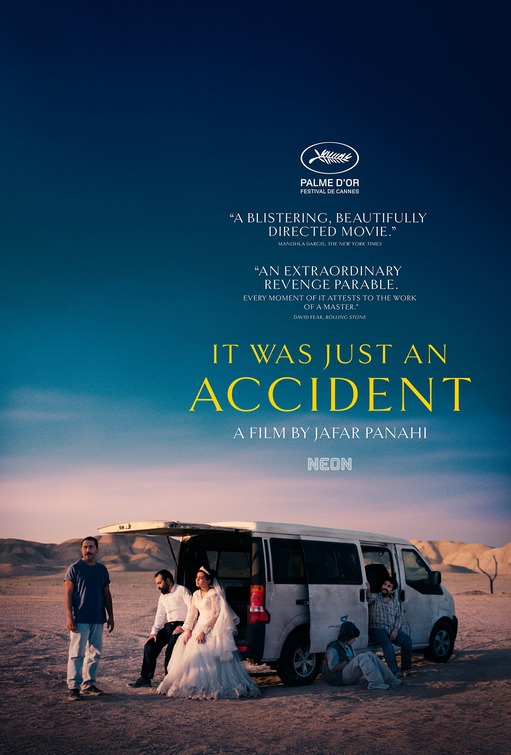
A man and his family accidentally hit an animal on the road and take their car to a nearby mechanic. The mechanic recognizes the sound of the man's prosthetic leg and identifies him as a sadistic guard that tormented him in prison. He kidnaps the man and tries to bury him, but the man insists that the mechanic is mistaken about his identity. The mechanic second-guesses himself. More former prisoners — a photographer, a newly married couple, and the photographer's former partner — are called upon, each of whom believe they can identify the man, but none are certain.
They argue about what to do, but are interrupted with a phone call, saying that the man's wife has fainted, bringing a whole new wrinkle to the proceedings. Panahi is a political poet, knowing exactly how much to show and how much to suggest in this murky tale of vengeance, and what it actually means to cause harm.
As with Panahi's previous film, the excellent No Bears, the Criterion Collection has given It Was Just an Accident a proper DVD, Blu-ray, and 4K release. The Blu-ray, from a digital master approved by Panahi, includes a new conversation between Panahi and filmmaker Ramin Bahrani (Man Push Cart, Goodbye Solo) (32:11), the Cannes Film Festival press conference with Panahi and members of the cast and crew (45:20), a trailer (1:58), and a fresh English subtitle translation. The liner notes booklet contains an essay by poet, scholar, and translator Sheida Dayani. Highly Recommended.